Women in history

TT
by to-teach Team
4 pages7th-8th gradeHistory
Template

Loading preview…

Your worksheet

Name a period (e.g. 1918–1920) and a country or city. Learners find out more about the everyday lives of women in the chosen period from an information text and role cards.

Need an idea?

Popular topics from other teachers

How our AI templates work

  • Content gets adapted

    Examples, texts and tasks match your focus.

  • Method & structure stay

    The didactically reviewed structure of the template won't change.

Description

Objective: Learners explore the role of women in a chosen period and develop an understanding of the successes and challenges faced by women in that period.

Content and methodology: Through text analysis, learners learn more about the living conditions of women in a chosen period. Subsequently, two role cards introduce women of the period and highlight their successes, challenges, and role in history. The results are recorded in a table. As a bonus task, a video from “Terra-X” with accompanying questions on the topic of misinterpretations of history is included.

Skills:

  • Strengthening reading skills
  • Recognizing the possibilities and limitations of individual and collective action in historical situations
  • Reconstructing historical facts (reconstruction)

Target group and level: 7th - 8th grade
More from: Focus on women

View all
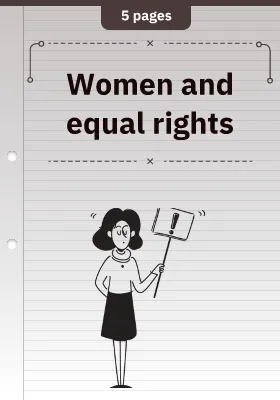
Women and equal rights

Women and equal rights

This worksheet highlights the historical and current situation of women's rights and equality. It addresses discrimination and injustices faced by women, particularly in science and research, and encourages reflection on the importance of equality in today's society.

Content and methods: The worksheet begins with a general introduction to the relevance of women's rights and the historical disregard for female achievements. An audio file provides insights into the current situation regarding equality in a selected country. Multiple-choice questions test students' understanding of these current issues. At the heart of the worksheet are three case studies of female scientists (Lise Meitner, Rosalind Franklin, Jocelyn Bell Burnell) who did not receive the recognition they deserved despite their groundbreaking discoveries. Texts written in the first person describe their experiences with ignorance and discrimination. A writing assignment asks students to describe the similarities between these injustices and draw parallels to their own lives or school, as well as to suggest possible courses of action. An additional assignment with a video explores the topic of equality in Germany in greater depth, including the role of the Basic Law and important milestones.

Skills:

  • Historical awareness: Students recognize historical inequalities and discrimination against women, especially in science.
  • Critical thinking: They analyze the causes of injustices and reflect on their impact on individual careers and social structures.
  • Empathy and perspective change: Through the reports of female scientists and the audio file, they gain insight into the experiences of women.
  • Transfer and problem solving: They apply historical injustices to current contexts and develop their own strategies for promoting equality.

Target group and level: 7th/8th grade

HistoryEthicsPoliticsPhilosophynon-subject specific content